Chapter 25
Build for what you need to know
Separate transformation, observation, policy, memory, and the return path for learning.
On this page
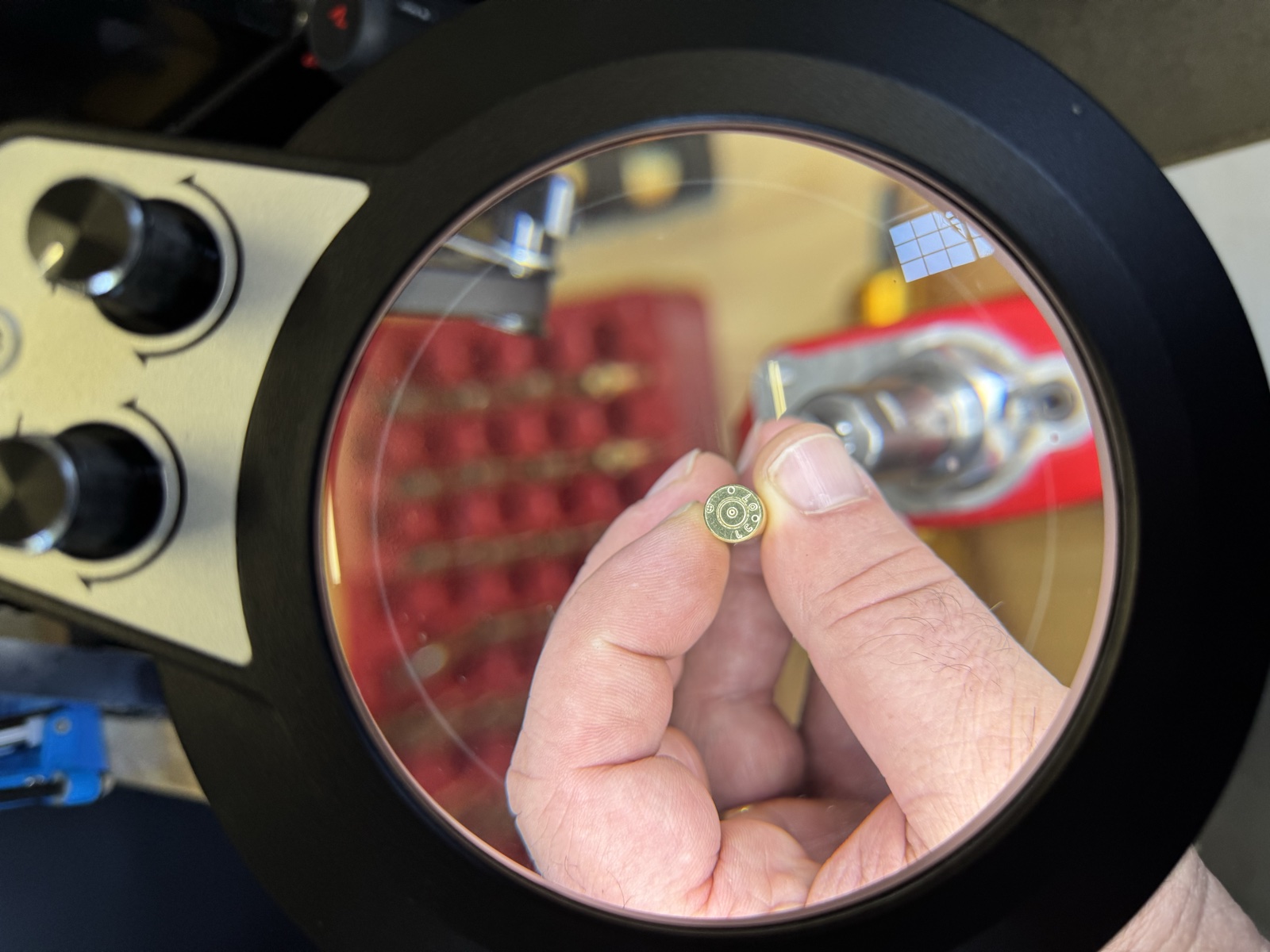
Next to the loading blocks there is a twelve-power illuminated magnifier on an arm.
Put a case beneath it and nothing about the brass changes. The crack exists whether the lens reveals it or not. The primer pocket is clear or obstructed before the light comes on. What changes is the operator's ability to answer the question at the moment the answer matters.
Before the magnifier, some inspection questions were honestly difficult to answer at this bench. An unanswerable question at a decision point does not remain blank. It becomes a guess, and the guess inherits the authority of an inspection.
An instrument changes what you can know. It never changes what is true.
Four jobs that look like one
The readiness line in Readiness is derived, not declared makes the separation concrete:
- A transformation changes material. Decapping clears the pocket.
- An observation exposes a fact. The magnifier reveals the pocket and case mouth.
- A policy gives the observed fact meaning. The caliber specification decides whether a measured length is acceptable.
- A memory preserves the decision and its provenance. The batch record keeps lot and load identity attached to the output.
Collapse those jobs and the system starts making claims its parts cannot support. A camera becomes an approver. A database field becomes evidence. A dashboard becomes the owner of the policy it happens to display.
The magnifier refuses to decide. The specification refuses to observe. The notebook refuses to alter the material. Their ignorance is what lets us find the wrong part when an answer is wrong.
Position is part of the instrument
The magnifier is mounted at the inspection seat. It is not kept in a drawer.
In the drawer it would be a forensic tool, fetched after a suspicious case or failed cartridge demanded explanation. At the decision point it is an operational tool, available for every inspection without relying on memory or extra motion. The same lens has different system value in those two places.
Position belongs in the instrument's design because use has a cost. If the cost is paid with attention and willpower, use falls away under load. Busy days are exactly when the system starts asking operators to remember the thing the design could have made unavoidable.
The baseline photograph of the progressive press is another instrument. It captures known state before accessories are added. One change can then be compared with one before-state. Without the photograph, twelve changes and one failure produce a debate about memory.
Norma's walkthrough of the mocked-up garage measured something no lens could: whether the containing system still worked for the stakeholder whose car must fit. A neighbor's walkthrough measured whether the station made sense to an experienced reloader. Different observers expose different hidden state. "Observed" is incomplete until we can say by whom, with what instrument, at which decision.
Design the question before the telemetry
The instrumentation plan begins with a decision, not a metric:
| Decision | Hidden state | Instrument or observer | Operator | What gets recorded | Provenance | How learning returns |
|---|---|---|---|---|---|---|
| May this case continue after inspection? | small cracks, pocket condition, case-head detail | mounted magnifier and light | reloader at inspection seat | observed defect or cleared check | case and brass lot when known | rejection reasons revise prep and sourcing |
| Is this case length acceptable? | exact measured length | measuring tool | reloader during preparation | measurement and gate reason | case, caliber, brass lot | repeated failures revise trimming work or lot handling |
| Did sizing produce acceptable headspace? | shoulder relationship too small to judge by feel | headspace gauge | reloader after sizing | accepted or rework reason | case and bounded lot membership | result tunes the sizing configuration and routes rework |
| Has this case crossed the current hand-work station? | progress after interruption | source and destination loading blocks | reloader at each station | location in destination | station and working set | resume from visible position instead of memory |
| Did this bench change create interference? | prior fit and clearance | before photograph plus movement check | installer | changed component and observed result | dated baseline | last change becomes first suspect |
| May a batch be released? | component identity and completed production facts | final inspection plus batch record | operator at release | count, load specification, brass and component lots | immutable batch identity | range result returns to the exact load version |
The first column protects the system from indiscriminate collection. "Capture more telemetry" is not a plan. What decision will become possible? What hidden state prevents it today? Who will act on the answer? Where will the result return?
If no operational question depends on a measurement, collecting it may still serve research, compliance, or forensics. Name that purpose. Data without a return path is inventory, not learning.
The gauge changes a real disposition
The sizing loop gave the instrumentation plan its first measured production result. Approximately twenty setup cases became scrap while the Dillon die was adjusted. Once that configuration was stable enough for a bounded proof, fifty cleaned, once-fired Lake City 5.56 cases entered the pass.
Every case went through the headspace gauge. Forty-eight passed. Two moved to rework. Two accepted replacements restored the working set to fifty before the RCBS swager processed it.
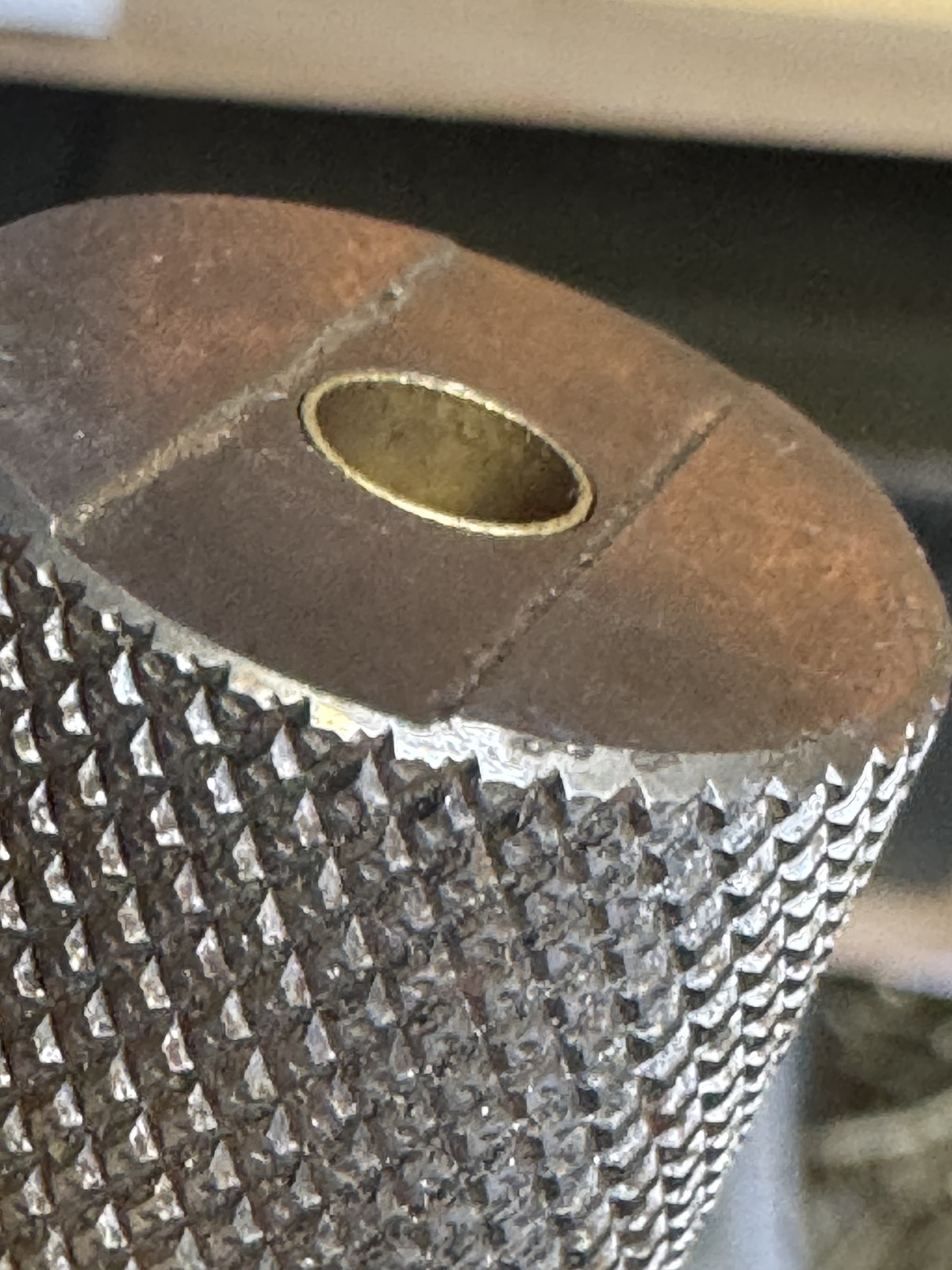
Three owners are visible. The Dillon transformed the brass. The gauge exposed the result. The acceptance policy and operator decided which path each case took. Calling the die "dialed in" would collapse all three into a feeling. The 48-of-50 result makes the first bounded outcome inspectable without pretending it proves long-term stability.
Let location remember progress
The loading block gained a second job without gaining a second guarantee. A full source block sits on one side of a hand-work station and an empty destination block on the other. Take one case, perform the operation, place it in the destination. The move is part of the operation.
If work stops, the location answers "which cases crossed this station?" The empty spaces are a progress bar. No count has to survive in the operator's head.
The block still guarantees only caliber fit. Source versus destination records station progress. Neither tells us why two cases left the accepted set or which replacements joined it. The block can return to fifty while batch membership changes. Position is observable workflow state; provenance is a different job.
Make refusal explain itself
The readiness gate is instrumented at the moment of decision. It does not
return false; it returns the failed facts.
The test comes first:
it "reports every failed fact in one admission result" do
  admission = gate.assess(cartridge_case(clean: false, sized: false))

  expect(admission.reasons).to contain_exactly(:dirty, :unsized)
end
The implementation returns an Admission whose reasons travel with the
verdict. That small result object changes operations. A boolean starts a new
investigation for every rejection. Reasons can be shown to the operator,
counted across a lot, and compared over time.
This is not the instrument making the decision. The gate owns the derivation.
The reasons expose how it reached the answer. If :unsized begins appearing
across a batch, the system has produced a question worth taking back to case
preparation. If the reason list is always empty because observations were
never recorded, the telemetry has exposed a different failure.
Build the system so it can answer "why" at the moment it says no. Retrofitting the answer later is archaeology.
The papers travel with the batch
Observation becomes learning only when an outcome can find its way back to the decisions that produced it.
The physical notebook records the load specification, brass lot, primer lot, powder lot, bullet lot, and observations. A superseded load receives a new version rather than silently rewriting the old one. Facts and interpretations remain distinguishable. The record has to make a round trip: identity travels to the range, and what the range teaches comes home attached to the same identity.
The Ruby model binds that provenance when a run completes:
BatchRecord = Data.define(:load_specification, :brass_lot, :component_lots,
                          :cartridge_count) do
  def label
    "#{brass_lot} / #{load_specification} / #{cartridge_count} rounds"
  end
end
The system-level test does not settle for two released objects. It asks for an identified batch:
expect(result.record.label).to eq("LC-2026-A / 556-2026-001 v1 / 2 rounds")That label is not the whole record. It is the human-scale handle that lets the operator connect physical output to the richer provenance behind it.
There is an open design pressure here. The completed result carries a batch record. The current halted result preserves faults, positions, recovery assessment, and all exits decided before the fault, but it does not return the input provenance. The run has not produced a batch, so manufacturing a batch record would lie. Losing the attempted run's identity may also make recovery or audit harder. Hold the plate keeps that question open rather than slipping a new ownership decision into an instrumentation chapter.
Make an instrumentation plan
Choose one decision in a system you operate and fill one row completely:
| Decision | Hidden state | Instrument | Operator | Recorded reason | Provenance | Return path |
|---|---|---|---|---|---|---|
Then test the plan with seven questions:
- Can the instrument observe the hidden state at the decision point?
- Does it change the state, or only expose it?
- Who interprets the observation?
- Can a refusal carry its reason without a second investigation?
- What identity lets later evidence find this decision again?
- Who reviews the accumulated evidence, and on what cadence or trigger?
- What decision would change if the signal changed?
If the last answer is "none," remove the instrument or state its nonoperational purpose honestly.
What the instruments have not earned
The headspace gauge has earned one concrete claim: it changed two dispositions in a bounded lot. The magnifier has exposed preparation detail. The baseline photograph exists. The notebook has recorded setup and lots. The reasons array is green in the test suite.
None of those facts proves the instruments will change the right decisions through primer placement, powder drop, bullet seating, final crimp, release, and range use. Instruments earn their place by improving operation, not by existing. Most of that proof remains ahead.
The next chapter moves into the progressive press, where one handle pull changes several pieces of state. Without per-position observation, the first fault would turn four truths into one unhelpful red light.